Showing posts with label Kohala. Show all posts

Sunday, August 25, 2013

North Kohala Coast and Waimea

King Kamehameha IOnce upon a time (1878),  Thomas R. Gould, a sculptor from Boston, living in Florence Italy, sculpted a statue of King Kamehameha I.

Now, the way I heard the story is that there was a debate over where the statue should be placed - the people of the Big Island wanted to for North Kohala, where King Kamehameha was born.

The Government Seat, though, is in Honolulu, and the plan was for the statue to be placed there.

Well!  Mr. Gould forged the sculpture in Italy, and sent it off to Honolulu by ship.  The ship sank somewhere around the Falkland Islands, near Cape Horn, and the statue was lost at sea.

Mr. Gould made another sculpture and sent that one, again, to Honolulu. That one arrived safe and sound and was erected in in front of Aliiolani Hale (Hawaiian State Supreme Court), and dedicated in 1883.

Pololu ShoreBUT THEN, in 1912, the original statue was recovered, restored, and guess where it now sits!  North Kohala, in a little town called Kapaau.

I don't know which town is which, when I remember them, but there's Hawi and Kapaau, and they are only  about 2.5 miles apart.  So, if I tell you all about it, and you get there and it's not how I explained, just go on to the next town.

Hawi
Here's what I know: there's a little boardwalk, quirky art stores, galleries, and ice cream parlor and patio, some yummy little restaurants, and a grocery store.  I think, technically, you could spend a whole day walking that 2 block strip and going in and out of stores, and stopping for coffee and lunch.  (I think it's Hawi.)

Pololu Valley OverlookBut, we (each time) have been passing through - to and from Pololu Valley Lookout.

  Actually, this year is the first year that I've hiked down INto Pololu.  Totally worth it. Take water.  (And your inhaler, if you need one.)

Pololu PathPololu Pathway

Pololu Valley is like the sister valley to Waipio Valley, and in fact, you can see the jut-out from Waipio if you look way beyond Pololu.
Pololu Valley 3
It is about 1000 feet deep and cuts into the Kohala Mountain, and the Pololu Stream runs through it.   (By the way, further inland, Pololu Valley is Privately Owned, so you need to stay near the Shoreline.  I guess there's tours, too, that can help you navigate properly.)

Hmmmmm.  There was a tour and trail that went to, and around, Kapaloa Falls.  Apparently, the waterfall dropped 300 feet above and 200 feet below the trail! However, the trail was destroyed in Hawaii's big earthquake a couple of years ago, and there's no access anymore... Keep your eye out, though. Maybe someday it'll be re-opened?

It's ANOTHER spectacular view from the Pololu Valley Overlook and I completely forgot to add it to my Top Favorite Views on the Island. (Obviously, the almost entire Island is beautiful and my list of "Absolute Favorite View" is growing...)
Pololu Valley 2Pololu ValleyPololu Valley 1

Enroute, between Waipio Valley and Pololu Valley is Waimea, also known as Kamuela. ("Kamuela" was adopted later (because of some confusion with the Postal Service) in honor of a resident named Samuel Parker, but Waimea is the original name and means "reddish water". )

We haven't spent a lot of time there, but always like driving through the little town of just over 9,000 (according to the 2006 Census).   It's a "western" town, partly made up of Hawaiian cowboys (Paniolos) who work on Parker Ranch, and the Stop Signs say "Whoa" instead of "Stop".  :)

Its a good place to stop for lunch or dinner, or to pick up your supply of Parker Ranch beef at the local grocery store.  (For non-meat eaters, the veggies and fruit are generally locally grown too, and high quality.  It is Hawaii, after all.)

HapunaJust down the road (30 minutes South of Hawi and 20 minutes West of Waimea) is Hapuna Beach.  I've talked about black sand and green sand beaches.  This is the WHITEST sand beach I've ever seen!

There is now a $5 entrance fee for non-residents, but not only does that include almost 62 acres of fine, white sand, but it has restrooms, drinking water, lifeguard services and is right beside the Hapuna Beach Prince Hotel, which has restaurants and lounges, and, of course, accommodations.

Hapuna 1

OK! So if you've been looking at a map at all, you will know that we've gone around the whole island, and are now coming down the stretch to the Kailua-Kona area.

Many would say I saved the Best for Last :D (refer to my Kona vs. Hilo blog!) I love both sides for different reasons.  But, for a certainty, without bias, Kona-side as ALOT to offer!

We are going to talk about... the Seahorse Ranch next. And, Petroglyphs, I think.

Sunday, May 5, 2013

Hawaii, The BIG Island

Yellow Hibiscus State FlowerI said we were going to talk about Hawaii in this blog, and I thought that was going to be “easy.” BUT, I can’t figure out where to start!!!

Should I start with “Hawaii, the State”? “Hawaii, the Big Island, general information”? I’ve decided to start with “Hawaii, this time around – Day 1.”
 
Going with people who’ve not previously been to Hawaii is always fun for me, because: we get to do things we did the first time we came, but maybe haven’t done since. OR, we get to do things we do every time, but they seem fresh and exciting, because they are fresh and exciting to someone!
 
This particular trip takes place on The Big Island of Hawaii. (Almost all of my trips to Hawaii (state) take place on Hawaii (Island), called “The Big Island” to avoid confusion. Another point that confuses many people is that “The Big Island” is NOT Oahu. Hawaii (The Big Island) is 4,028.2 square miles (2,578,048 acres). Oahu, by comparison, is 727.3 square miles (465,472 acres.)
 
View from KonaIt’s about 95 miles from the North tip to South Point, 80 miles from east to west, and has 266 miles of coastline.
 
Take a look at the map. Without reading labels, you should be able to pick out which island is the Biggest! That’s the one we are visiting.
 
It’s also the youngest. Compared to Oahu’s estimated age of around 3.4 to 2.2 million years old, Big Island is still a keiki (Hawaiian for “child”) at less than 700,000 years old… and still growing. (As we shall see in a later blog.)
 
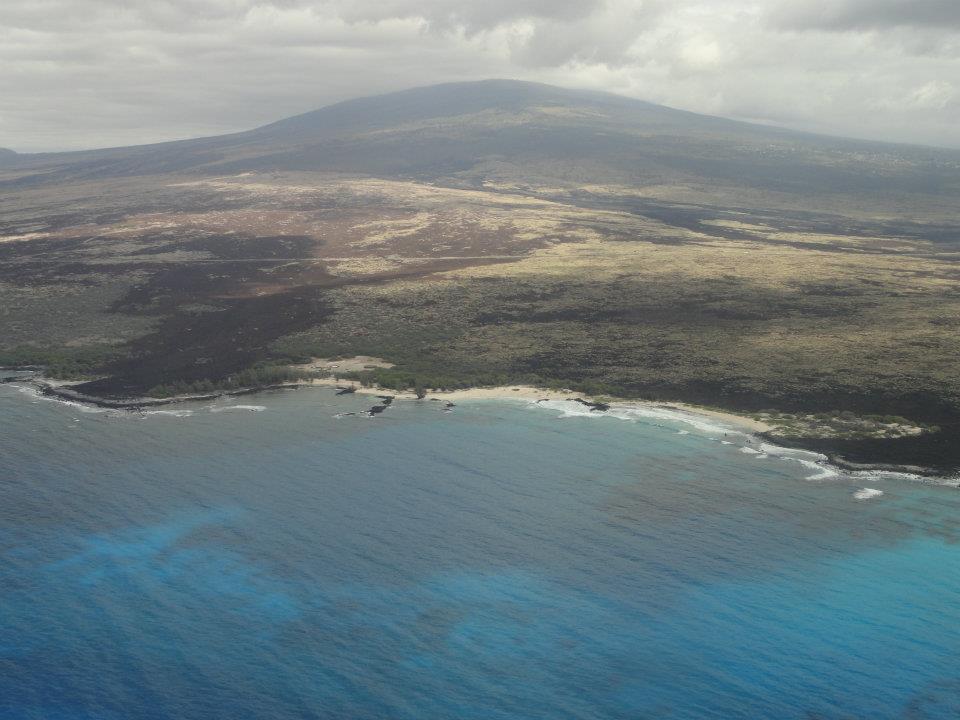
Kohala maybe?The oldest volcano on The Big Island (there are 5 main volcanic mountains that make up the Island) is Kohala, the northern most mountain. It is estimated to be about a million years old, but reached the surface of the water around 500,000 years ago, and the last estimated eruption was around 120,000 years ago. It’s 5,480 feet (1,670 meters) above sea level, and it’s about 5.8% of the land area of the Island. It is considered “extinct”, which means that it will (supposedly) never erupt again.
 
Hualalai maybe?Mauna Kea is considered “dormant”, which means that it hasn’t erupted in the past 200 years (“historic” times), and probably won’t erupt again.
 
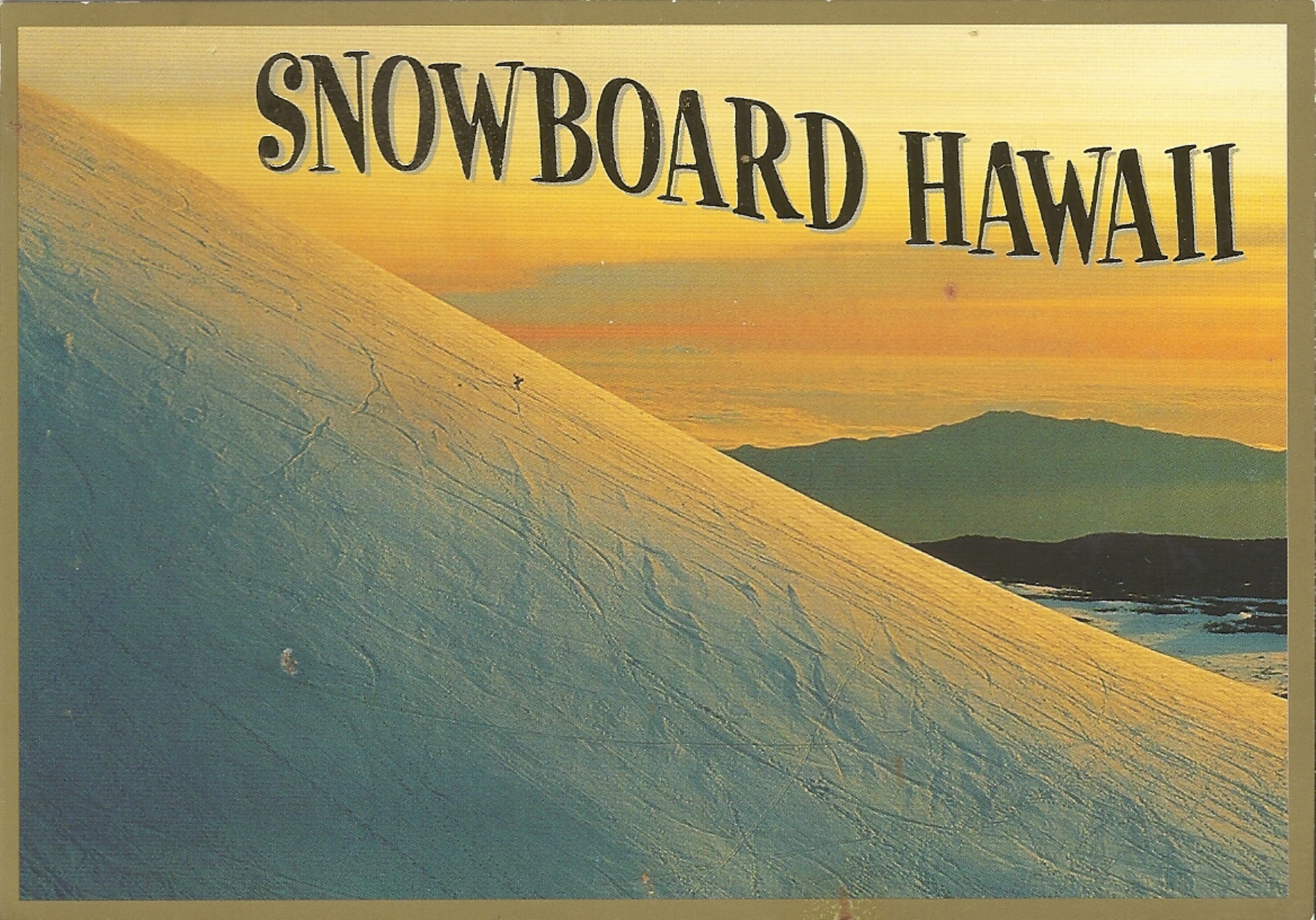
Mauna Kea last erupted around 4,500 years ago. It’s name means “White Mountain” and it often has snow on top. You can even ski and snowboard up there! I think some people even go sledding up there too. I haven’t been up there yet, but it’s definitely on my “to-do” list…well, not to go skiing, I don’t Snowboard postcard

 
think.. it’s REALLY high altitude and often has wind warnings, so timing is tricky.. Plus, I’m not great at skiing and worse at snowboarding… I could maybe sled.. (There’s also caution extended to people who SCUBA, because of the high elevation verses being under the water – something about “the bends”… I guess divers know the restrictions. If not, look it up before you try to SCUBA and summit….Apparently, even if you aren’t diving, altitude-sickness can still be a problem.)


Mauna KeaMauna Kea Mauna Kea is 13,796′ (4205 meter) above sea-level, and the ski hill is at the summit. In fact, Mauna Kea (measured from base to peak) is the tallest mountain on Earth, at 33,476 feet (10,203 meters)!!!! (Mount Everest is 29,035 feet (8,850 meters).. I probably won’t sled. It seems cold. BUT, I’d like to see it.
 
Also up on Mauna Kea is the Onizuka Center for Astronomy (also called Hale Pōhaku, which means “stone house”). They have free stargazing every night! (Yes – this is definitely on my to-do list.) The Center is at 9,300-foot (2,800 m) above sea-level, and it’s suggested/recommended to spend time there to acclimatize, before ascending further.
Hualalai
Hualalai is the Big Island’s oldest ”active” volcano, meaning it has, at some point, in the past 200 years. Hualalai’s last eruption was in 1801.
 
The oldest rocks of Hualalai date back about 128,000, but it’s estimated to have reached the ocean’s surface around 300,000 years ago. It is 8,271 feet (2,521 meters) above sea-level.
 
An eruption is predicted for sometime in the future (in the next 100 years, I read), but is carefully monitored by the Hawaii Volcano Observatory… Hopefully, if anything happens, it’ll be a mild and peaceful eruption… like, a breaking through the surface and a trickling stream down the side…where nobody lives…heh.
 
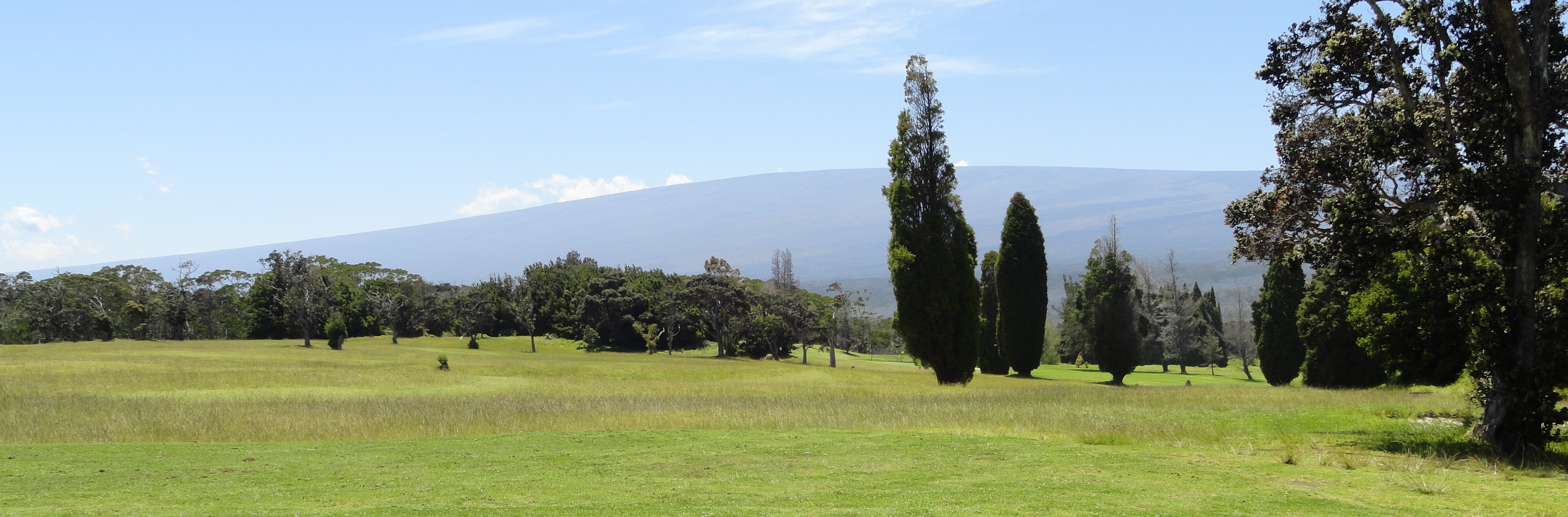
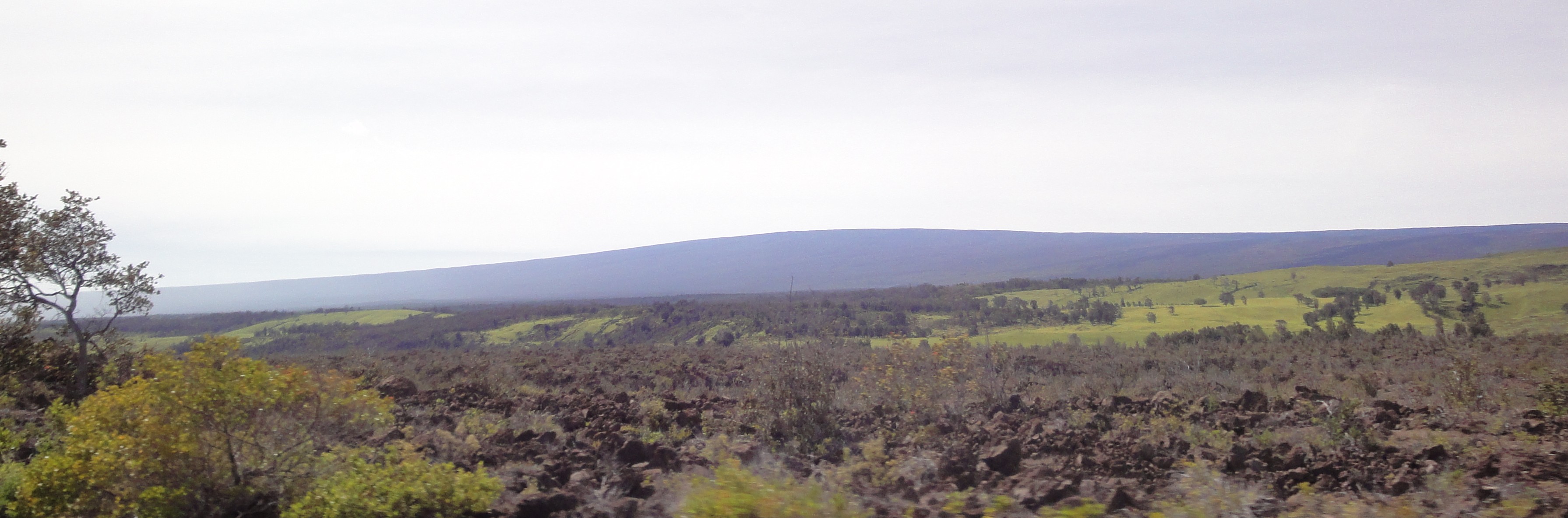
Mauna Loa means “Long Mountain”. This is a great name! It’s HUGE and has the title of being the “Earth’s Largest Volcano“!! It makes up 50% of the total land base for the Big Island. It’s 60 miles long, 3o miles wide, and 13,681 feet above sea-level. It’s below the ocean’s surface by about 5 kms AND THEN! Because it’s soooo huge and heavy, the sea floor has depressed another 8 kms!! So, technically, it’s summit is around 56,000 feet (17kms) above it’s base!! Yikes!
Mauna Loa 1Mauna Loa
Mauna Loa is estimated to be about 1,000,000 years old, but didn’t reach the ocean’s surface until maybe 400,000 years ago, and the oldest rocks are estimated to be in the 100,000 year range. The last eruption was 1984, and is expected to erupt again…someday.
KilaueaAs discussed, volcano’s are categorized as “Extinct”, “Dormant”, and “Active”. Personally, I have a fourth category: “REALLY Active” – those that are erupting right now! There’s probably an official term anyway, but I didn’t happen across it.
 
“Really Active” is Kilauea, possibly earning the title as “most active” in the world. Although it looks like it’s coming from Mauna Loa, it is actually it’s own volcano. “Kilauea” means “spewing”, which is appropriate since it’s been erupting non-stop since 1983.
 
It’s estimated to be between 300,000 and 600,000 years old, and having reached the ocean’s surface between 50,000 and 100,000 years ago. The oldest rocks date to around 23,000 years old. It is currently 4,190 feet (1,277 meters) above sea-level…the Pu’u O’o Vent (the current erupting point) is a “cinder-and-spatter cone” and lava from it flows through Lava Tubes into the ocean, so it isn’t really gaining height at all, BUT about 500 new acres of land have been added since 1983.
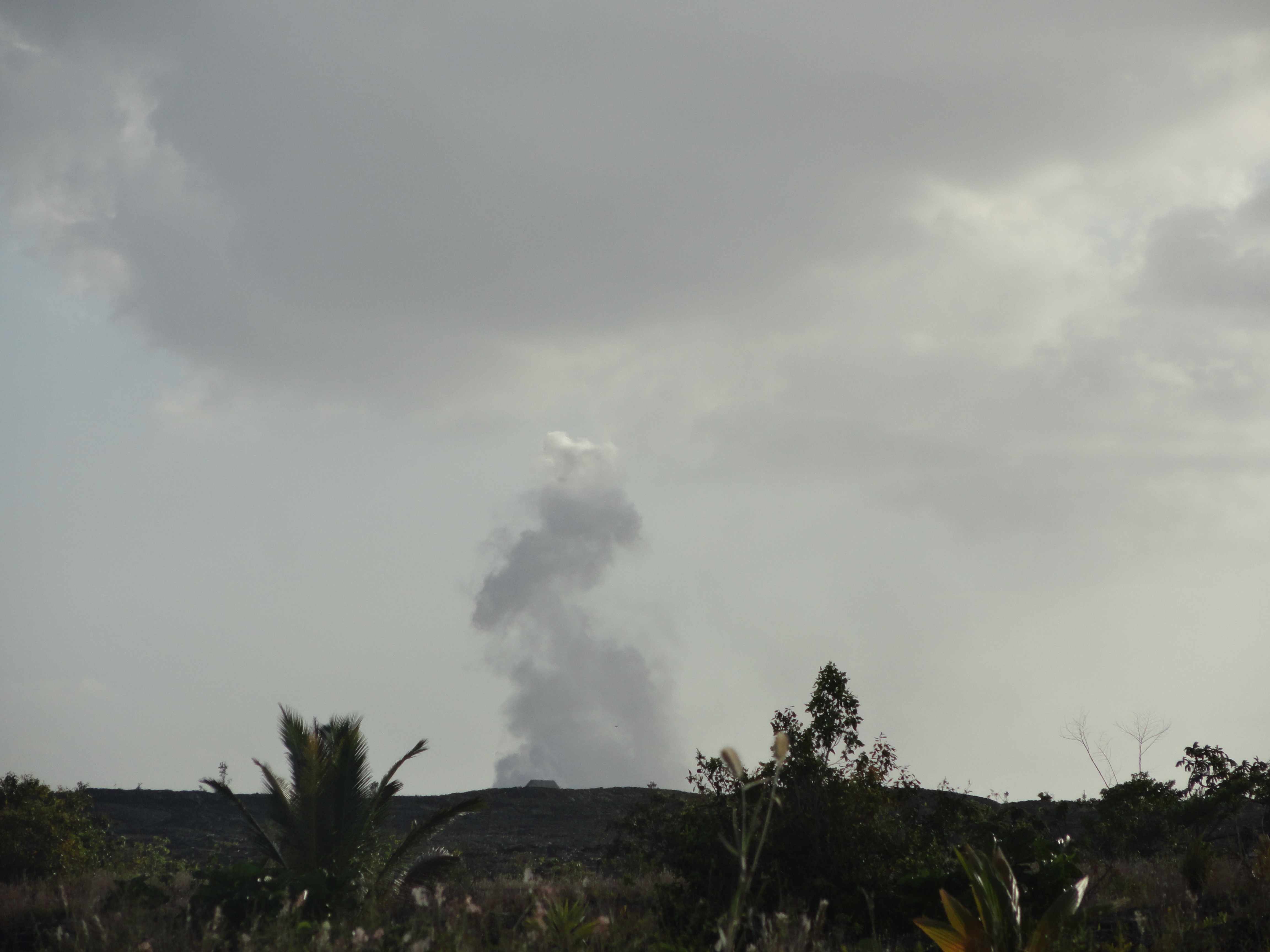
You can see the steam from Pu’u O’o as the lava comes down the mountain and a big plume where it reaches the ocean! Technically, you can hike to get a closer view, but it’s very strenuous and can be dangerous – so do aLOT of research and double check conditions with the Park Rangers at Volcano National Park.
Pu'o O'o
You can also get a pretty good view of the Halema’uma’u Lava Lake right in the Kilauea Crater, from the Jaggar Museum in the Park - it’s kind of at an angle that you can see either steam or the red glow (depending upon the time of day), but not really any liquid lava. They have a web cam, though, too, for an even better view.)
 
Halema'uma'uAn article from October 2012 says that the lava in the Lake had surged about 50 feet (15 meters) and only had about “110 feet (33 m) to go until the lava reaches the top of the vent and floods the crater floor”! (This link has an interesting report from October 2012, plus youtube video.)
 
Wednesday’s blog will be about Kilauea and Volcano National Park. (Oh yes. I’m going to try to get back to a Wednesday/Sunday routine.)
 
Hawaii Mountains
Before I go today, though – I just want to talk about one more active volcano – a “brand new” little up-and-comer – Lo ‘ihi. I’m not sure when it first started erupting, but it reactivated in 1996. It is currently about 931 meters tall on the north side, and 3,786 meters on the south side, since it’s growing on a slope.
 
OK! See you Wednesday!